Posts mit dem Label marketing werden angezeigt. Alle Posts anzeigen

Sonntag, 24. Januar 2016

FlixBus & MeinFernbus Are Offering Spotify

Week Beginning: 18.01.2016


The companies „Mein Fernbus“ and „FlixBus“, which recently have merged to form a partner-company have now Spotify on board. All around Europe, especially in Germany, these two bus companies have become a replacement for the train. On one hand, because they are much cheaper, but also because they offer free-wifi in their busses. With their newest marketing strategy, the company is trying to attract more customers.
Wifi was always offered during the bus rides, but it used to block Spotify, in order for everyone to have the same amount of data volume and therefore the same access to the internet. These times are now over since the company offers the access to Spotify now for their customers. Furthermore Spotify and FlixBus are offering a playlist for their customers too.

With this strategy the company hopes to attract more customers and maybe one day even become the market leader for transportation in Germany, since they are already the market leader in the bus transportation market. Since the company has a high number of younger people, often university students, as their customers, it makes them their target audience with their marketing strategy. Especially because Spotify is very popular within this specific age group.
This the links to Strategy of the CUEGIS, since the company has developed this certain marketing strategy to attract more customers. As mentioned above, they are trying to attract this special age group and are hoping to create brand loyalty within this age group. Furthermore it could create brand recognition, since more people would be thinking about using FlixBus instead of Deutsche Bahn. Furthermore it links to Change and Innovation of the CUEGIS, since it is a change for the company, since they never offered something linke that before. It might also link to Innovation, since no other transportation company/method offers a service like that, which makes it something entirely new in the market.

Freitag, 20. November 2015

Microsoft is Opening Windows Store to Businesses

Week Beginning: 16.11.2015


Since early October, however, Microsoft has opened up about its plans a bit more. One of the big changes coming in Windows 10 is that the firm will allow businesses to customize Windows Store and manage the delivery of apps to their users.
This is a big deal for the company. When you consider how consumer-focused the Store was in the initial Windows 8 release two years ago, it becomes obvious that this change is in many ways an even bigger deal.
That is, in Windows 8 Microsoft introduced a safe, reliable and consistent apps platform. But it limited the reach of that platform by forcing those apps to only run in full-screen, by limiting the interaction these apps could have with desktop apps, and by pushing a touch-first user experience that isolated over a billion users on traditional PCs.
Microsoft started to break down the wall between these new apps, and the desktop. In Windows 8.1, it added a title bar with standard controls to these apps, making them easier to use with a mouse or other traditional pointing device. And in the initial Windows 10 pre-release builds, we've seen the next step, where these apps can run in windows on top of the desktop and alongside your other apps.
But the back-end changes are even more important. In Windows 8.1, for example, users can browse through the Windows Store and find a fairly middling collection of mostly consumer-oriented apps, and while Microsoft does let some desktop applications be advertised in the store, you have to download them and install them from the web, and those apps do not come with the liberal licensing found in Windows Store. Furthermore, you need to use a Microsoft account to even download an app from Windows Store.
Here's what's changing in Windows 10.
First, Microsoft is allowing business customers to use their domain accounts as connected accounts that work just like Microsoft accounts from the perspective of app acquisition and licensing. This means that highly managed businesses that wish to retain control over which apps their users install on work PCs and devices can now do so, and they no longer need to worry about users with their own Microsoft accounts on those machines.
Second, Microsoft is letting businesses modify Windows Store on their users' PCs so that they see a custom version of the store than highlights work apps and, if desired, those publicly-available apps that the business approves of. There will be a web-based portal for IT administrators that let them assign apps to users and user groups in Microsoft Azure Active Directory, Microsoft says.
Third, Microsoft is adding Windows Store management capabilities to System Center and in tune, and opening up these capabilities to third-party Mobile Device Management (MDM) solutions. This will allow businesses to manage the installing and uninstalling of apps, app updates, app licensing, the addition of apps to Windows install images, the deploying of provisioning packages, and the ability to automatically install apps from an on-premises-based server.


This article links Strategy of the CUEGIS, since this is a marketing strategy of Microsoft to aim the new update of Windows directly to Businesses. The company tries to find a new market for its product by advertising their product directly to this market. In this case it also links to Market Development of the Ansoff’s Matrix, since the company is introducing an existing product into a new market. However since it is an update of the existing product with new features directly addressed to the new market, it is more Diversification of the Ansoff’s Matrix, since it is a new product in a new market. Therefore it is also very risky for Microsoft to do this step, since they are the market leader for computer softwares, but not for their App Store. Furthermore it also links to Change and Innovation of the CUEGIS. Since Microsoft has never advertised their software directly to businesses it is a change for the company. Adding to that, it links to innovation since there is not really a product (software) which is directly customized for a business use. Most softwares like (Microsoft), iOS or linux are customized for an average person, in order to attract a large customer base. Since Microsoft is the market leader in their market, they will have the possibility to attract a large customer base. They are also benefitting from their brand image and brand loyalty of their customers.

Montag, 2. März 2015

Follow the Product: The 4Ps


The product I chose are the Nike Air Max 87, also known as Air Max I, because they were the first shoes launched from the Air Max collection. Below I will talk about the marketing mix of Air Max One.


First of all many shoes from different companies like Adidas or Puma are competing with the Air Max, but they still differentiate themselves from their rivals. To start with is the weight of the product. Air Max are known for their very light weight, which is the reason why they are called ‘Air’ Max. It is said that their soles are loaded with air, which makes them so light and is a USP of the product. Another point would be the flexibility, as Airs can be worn with all kinds of sports. This is a great benefit for the product and especially for Nike as their competitors mostly produce footwear directly aiming towards a sport, which does not give them the same popularity as Air Max One. Furthermore the padding is another point that differentiates Air max 87 from other product in the market, as it gives clear medical advantages. Because the products soles are loaded with air, when the player puts load onto their feet, through moving, the padding retains the effect in the shoe instead of passing it onto straining the body. Lastly the strength of Air Ones is noticeable as they give a very strong feeling to the playing and ensure that the air in the soles stays there. One of their unique selling points would be that the customer has the possibility to personalize their show, which is very popular with the Air Max One. It creates a desire for the customer, because they could have any model they like and order it in the color or design they want. All in all Air Max One are being bought, because of their casual look and their great comfort.

 http://schuhe-selbst-gestalten.com/wp-content/uploads/2013/09/nike-air-max-premium-designen-300x159.jpg


Moving on the price for the shoe varies. First of all it depends if it is for adults or for children. For children the price of the shoes varies from 50€ to 100€. For adults the price can start from 100€ to 180€. Buying the shoes online in the Nike online store would cost the same as buying the shoes at the local Nike store in town. Even recommended retail prices, like Zalando or Footlocker, do not differ with their prices. This is also because they have cooperation with Nike, which means that they have to adapt the price from Nike, Inc. to the shoes. Noticeable was that Psychological pricing was not used for any of the websites or any store, as they tend to sell air max at a round price, rather than selling it for .99€. Furthermore price leadership is being used, which is a strategy often used for the best selling product or brand of a particular market. This would apply to air max one and to Nike, Inc. as Air Max are one of the most popular products of Nike and the firm is the market leader(has highest market share) in the athletic footwear market. Other rivals like Adidas use the ‘follow the leader’ strategy, as the prices of their product do not differ very much from the prices of Nike. Although Nike and other retailers do not use a lot of pricing strategies like technological firms or for services, they tend to reduce the price of the product, after a while. This is mainly caused by the season, and if the product is becoming out of season and if it was unpopular.

 http://2.bp.blogspot.com/-GVeF9V8ZEKw/UQVADZSHaXI/AAAAAAAABIY/Izx7wH09RT0/s1600/4.JPG

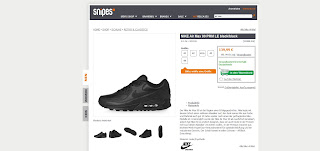
For place, Nike has several channels of distributing. This would include through their stores and retailers, both through e-commerce and through stores. One would be a zero-level channel (Nike Stores), where the producer/company directly sells to the customers. Then the one-level channel, where the product is first sold to retailers, agents or distributors. This would apply to Zalando, Footlocker or Snipes, which are all known for selling Air Max. Nike Air Max One are being sold in different kinds of retailers. For example they are sold in independent retailers, which are selling a very small range of products; multiple retailers might also sell Nike shoes. Furthermore Nikes would even be sold by hypermarkets and department stores. A rather not so often used channel of distribution would be the two level channel. This process happens through selling the product from the producer (Nike) to a wholesaler (Makro) to a retailer and then to the customer. There are several wholesalers online, that purchase large amounts of Nike products and resell them, but it is not as often used as for other products. Other channels of distribution would include telemarketing, which is not very popular anymore nowadays, but can be very helpful for a company as it reaches a different audience, which Nike would maybe not reach through the internet. Because the Nike Air Max One have been around since 1987, this used to be very poplar to increase the sales. Adding to that, e-commerce is very popular for selling Airs, as it reaches a wide international audience. This happens through the online Nike stores and online retailers, which might be different in every country. All in all Nike, Inc. is very up to date with their channels of distribution, which is a cause of their high market share.

 
nike-store-berlin-13


Lastly Nike, Inc. also uses promotion to boost up their sales. First of all they are using a lot of Above the line promotion, like TV advertising, cinema ads, magazines advertisements, outdoor wallpapers and especially internet ads. First of all TV and Cinema ads would be more likely the same as it is an advertising spot, before a movie. Then Magazine and outdoor ads would also be similar as they have a paper with all the information of the product. The ad would especially occur in fitness and health magazines, but maybe even in fashion magazines, because Airs seem to be a new fashion statement nowadays. On the other hand, Nike, Inc. also uses Below the line promotion, like branding, which is very effective for Nike as they are the most recognized shoe company, which also is caused through their slogan and their logo. Both slogan “Just Do It” and their logo “Swoosh” are recognized by a wide range of people internationally. This brand recognition might even go beyond their customer base and their target market, as people who do not buy Nike products are also very familiar with the brand and its products. Even their packaging is very effective, because it creates greater brand recognition by showing the brand logo and name. Direct marketing is also used by Nike, Inc., because they aim to sell their product directly to the customers rather than to rely on retailers. Even publicity is used very much, because they use different celebrity to promote their products, either in a spot or by them wearing them in their free time, examples LeBron or Rita Ora. Lastly sponsorship is also commonly used of Nike. The company sponsors a lot of sports events/tournaments, like the Olympic Games or any world cup. They even sponsor famous athletes (Jordan, Mario Götze). Nike also uses the promotional mix (AIDA). First of all they want to raise their brand awareness by grabbing the customer’s attention. This could happen through any kind of advertisement. Then they want to make the customer interested in their product, this happens through could happen through sales promotion or their USP. Furthermore a desire is created, in order to make the customer think they need or want the product. This could also happen through the USP or in Nikes case through the possibility of personalizing your shoes. Lastly the action takes place, through promotional methods. Also by having the possibility of ordering the product very fast only and having much flexibility encourages the action of the customer.


http://cdn.solecollector.com/media/sneakers/images/rita-ora-nike-air-max-90-og-vntg-infrared.jpg

 https://www.footy-boots.com/files/2012/10/nike-ioc-olympic-sponsor-deal.jpg


All in all Nike uses the marketing mix very much, which resulted in a lot of benefits over the time, since the first Air Max were launched. The product life cycle of air Max One is very long and they have been in the maturity stage for very long now, all through extension strategies, which resulted for them ending up as the market leader.

Sonntag, 15. Februar 2015

Follow the Product: Background


 Week Beginning: 09.02.2015

The Nike Air Max 87, also called Air Max I, were the first shoes from the Nike Air Max line, which launched in 1987. The Air Max I are one out of many sportswear products Nike, Inc. produces. The shoes were first designed by Tinker Hatfield in 1985, who also created the Nike Jordan. Nike, Inc. was founded in 1964 by Bill Bowerman and Phil Knight as Blue Ribbon Sports and officially became Nike, Inc. in 1971. The brand has its name from the Greek goddess of victory. In 2014 the brand was valued at $ 19 billion being the market leader among sport businesses.
The company’s slogan “JUST DO IT” is one of the best known taglines ever and one of the core components of Nike’s brand. The slogan was established at an advertising agency meeting, of Wieden+Kennedy agency, in 1988. The founder of the agency, Dan Wieden, credits the slogan to Gary Gilmore’s last words. The “Just Do It” campaign increased the market share of Nike from 1988 to 1998 of the North American domestic sport-shoe business from 18% to 43%.
Along the Slogan “Just Do It” the logo, known as the Swoosh, is a trademark for Nike, Inc. The Swoosh (Nike Tick) is one of the most recognized brand logos all over the world. The logo was created in 1971 by Carolyn Davidson. In 1972 the first running shoes by Nike bearing a Swoosh were introduced at the U.S. Track and Field Olympic Trials. Until 1995 the official logo of Nike showed a Swoosh and the name Nike in bold cap font letters. After that the company decided to use the Swoosh only as a brand corporate logo and continue to use it till today.
The Nike Air Max I are one of the most popular models from the Air Max series. For customers there are many buying motives for this product. One would be the quality of the product. Many customers know that if they buy Air Max 1 they will receive a quality product, like all of the shoes in the series. Especially the padding and the strength of the material are different than the competitors’ products. Secondly the weight of the product has to be considered. Air max are very useful for sports due to their light weight, which makes wearing them more comfortable. Adding to that is the flexibility of the product. Nike Air Max 87 can be worn for many sports and even in the free time, which could be their unique selling point.
Nike is the market leader in the sport footwear and apparel, with a worldwide market share of about 28%. In the United States Nikes market share is almost 60 % in the sport footwear market. Adidas would be the closest rival for Nike, Inc. with a worldwide market share of almost 20%. In the US however their market share is only about 10 %. Other companies like VF Corporation and Puma, which operate in the same market have a market share lower than 10%.
Nike Air Max 87 or in general Nikes are targeting to people with an active lifestyle, like OPALs (Old People with Active Lifestyle) or just any person interested in sports. Adding to that they are targeted to people, that do sports as their profession. Through time especially Air Max became popular as footwear for free time and leisure activities. Therefore Air Max 87 (in general Air Max), which are very popular with teenagers, are targeted to younger people with much free time and flexible lifestyle.
All in all Nike Air Max 1 is the most popular model among the Air Max 90. This links to Globalization of the CUEGIS, because Nike could not have such big success without being a multinational company which operates all over the world. Through globalization customers in different regions tend to have the same taste in clothing, which makes it much easier for Nike, Inc. to have success, as their target market tends to be the same in many countries. Adding to that this has a link to Change of the CUEGIS as the product, Air Max 87, changed over time. The company has many different models included in the Nike Air Max line. The different shoes also change over time and become improved. At the same time it links to Innovation, because at the time when Nike was established, having such fashionable sportswear seemed very innovative, especially when the first Air Max were launched. Although the Air Max exist very long for a shoe model, their sales do not seem to decline, which defiantly still puts them into the section of the cash cow. This is caused by the several extension strategies Nike, Inc. uses. The company extended the maturity for the Air Max 1 with redesigning and brand extension, which worked very well for them. They even might have extended the product life cycle with market development, as they introduced Air Max to non-athletic people. All in all Nike is forecasted to have more success in the future. 


http://www.afew-store.com/media/catalog/product/3/6/36748_2.jpg

 http://famouslogos.net/images/nike-logo-evolution.jpg